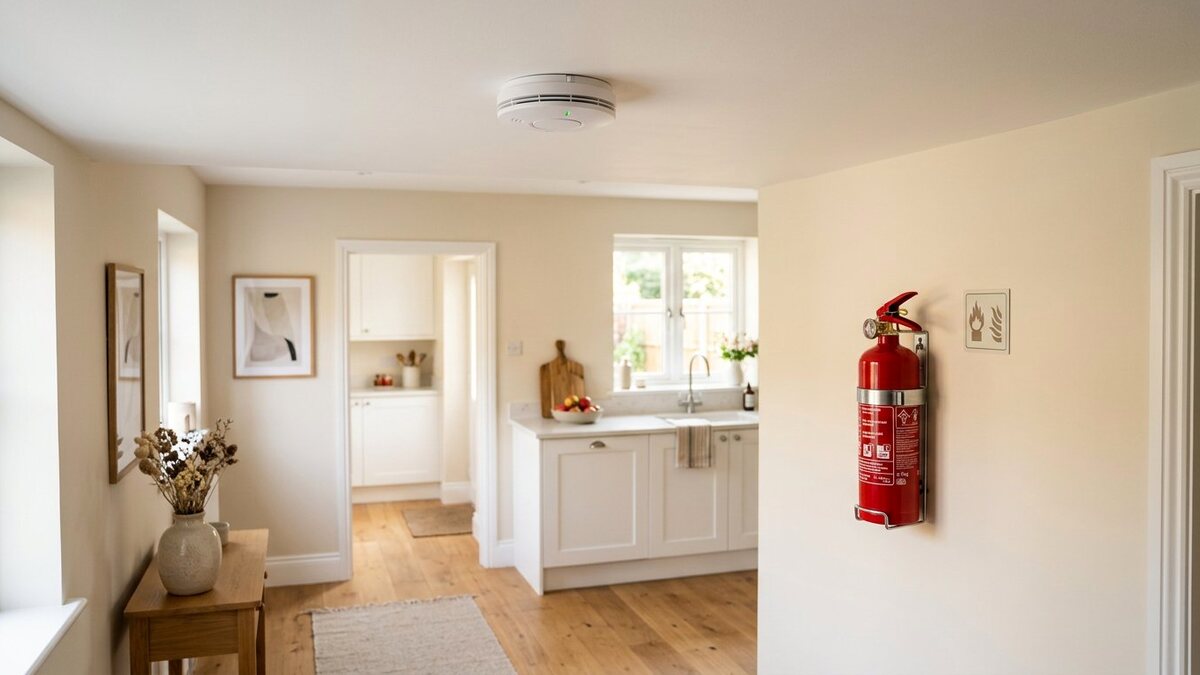
Safety equipment is only useful when it is in the right place, working and understood by the people who live with it. This is the walkthrough we do with families — in order, room by room, so nothing gets forgotten.
Kitchen: The Highest-Risk Room
Most home fires begin while cooking. Keep a fire extinguisher within easy reach of the stove but never directly beside it, and make sure everyone old enough knows how to use it. A heat detector is better than a smoke alarm in some kitchen positions because steam and frying will not set it off by accident.
- Extinguisher mounted on the exit side of the cooking area
- Heat detection installed where steam is common
- Loose sleeves and towels kept away from open flames
- A lid or baking sheet within reach for pan fires
Hallways and Bedrooms: Escape Routes First
Smoke alarms belong inside and just outside sleeping areas, and on every level of the home. Test them on a fixed date each season and write the date on the back. Then walk the escape plan with your family: two ways out of every room where possible, a meeting point outside, and a rule that nobody re-enters the house for anything.
“A plan everyone has practised once is worth more than equipment nobody has ever touched.”
Doors and Entry Points: Security That Fits Your Routine
Security works best when it is boring. Cameras at the main entry, the driveway and any rear gate, a smart lock that tells you when it was used, and a routine for letting in deliveries. Avoid pointing cameras into neighbouring windows — it causes friction that ends up making people switch the system off.
Utility Rooms, Garage and Basement
Clean dust away from water heaters and dryer vents, keep paint and solvents in closed metal cabinets, and avoid storing anything directly under electrical panels. A single well-placed smoke or heat detector here protects the part of the house you visit least. If you add solar or battery storage, ask about its specific safety shutdown and labelling requirements so emergency services can act quickly.
Quick takeaways
- Test alarms on a recurring date and note the month on each unit
- Extinguisher on the exit side of the kitchen, not beside the stove
- Two exits per room where possible, one meeting point outside
- Keep utility rooms dust-free and panels unobstructed